A young neuroscientist from the Brain Science Institute, Korea Institute of Science and Technology asserts that the discontinuation of psychotropic drugs and effects of drug withdrawal should be a field of study on its own.
For decades, psychopharmacology has focused primarily on what happens when a medication is started: how drugs interact with receptors, alter signaling, change neural circuits, and produce therapeutic effects. Far less attention has been given to what happens when treatment stops. A recent commentary in Nature Neuropsychopharmacology, The Neuropsychopharmacology of Treatment Discontinuation, argues that discontinuation deserves to be understood as its own area of neuropsychopharmacology.

The author raises important questions about the consequences of repeated cycles of starting, stopping, and restarting psychiatric medications.
The author, Baeksun Kim, proposes that stopping a psychiatric medication is not simply a return to the pre-treatment state. Instead, treatment can produce neuroadaptive changes that persist after the medication is reduced or removed. During long-term treatment, the brain adapts to the continued presence of a medication. These adaptations may involve changes in receptor sensitivity, neural signaling, excitatory/inhibitory balance, and gene regulation. While the medication remains present, these compensatory changes may be largely hidden because they are counterbalanced by the drug’s effects.
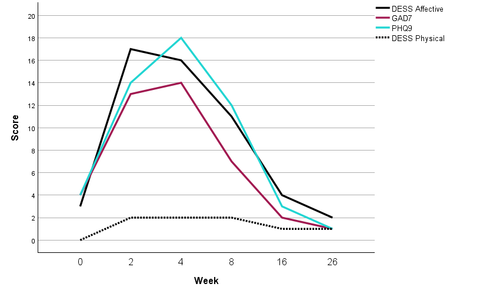
When the drug is removed, however, those adaptations can temporarily become unopposed, Kim argues. This can create an active discontinuation, or withdrawal, state involving pharmacodynamic rebound, counterregulatory processes, and other neurobiological changes that may persist beyond the time that the drug itself remains in the body.
Kim points out that changes in dose do not always result in proportional changes in drug effect. At lower doses, relatively small reductions in dose can produce disproportionately large changes in receptor or transporter occupancy. This means that the final stages of a taper may not be pharmacologically equivalent to the initial stages. In other words, simply dividing a treatment course into equal dose reductions does not necessarily produce equal biological reductions in drug effect.
Another important question is whether previous treatment and discontinuation can influence how a person responds to the same medication in the future. The article discusses discontinuation-induced treatment refractoriness, the possibility that a medication may become less effective when restarted after it has been discontinued. Evidence for this phenomenon is strongest for lithium, while there is also emerging evidence suggesting that similar processes may occur with antidepressants, although the evidence remains less established.
Can previous treatment and discontinuation influence how a person responds to the same medication in the future?
This raises important questions about the consequences of repeated cycles of starting, stopping, and restarting psychiatric medications, including whether repeated discontinuation and reinstatement could contribute to an apparent pattern of “treatment resistance.”
It also complicates attempts to distinguish withdrawal from relapse. If reinstatement becomes progressively less effective at relieving discontinuation symptoms, a lack of response to restarting the medication cannot necessarily be taken as evidence that the original disorder has returned or that the medication is no longer treating the underlying condition. In this way, repeated treatment and discontinuation may themselves become part of the clinical picture that clinicians must consider when evaluating treatment response.
As Kim aptly notes, “discontinuation is an intervention” and should no longer be treated as an afterthought or simply as the final step of prescribing. Instead, researchers should study different tapering trajectories, withdrawal, and relapse as distinct phenomena; longer-term neuroadaptation; and factors that may make some individuals more vulnerable to difficult discontinuation. The goal should eventually be to identify who is at greater risk before discontinuation begins and how discontinuation can be made safer and more predictable.